
Slideshow
26 décembre 2007


22 décembre 2007

17 décembre 2007
Variations autour de la truffe noire/ Ode au macaron...
 Pierre Hermé,
 Voulez-vous m'épouser?
Pardonnez mon insolence,
Mais je ne peux m'empêcher
Ma flamme de déclarer,
A celui qui m'a fait atteindre
Le paradis des sens.
Un orgasme même!
Lorsque je goutais la crème
Fondante et délicieuse
De la truffe vénéneuse.
Ah! Vos macarons,
Caramel, foie gras ou passion,
Faudrait vraiment être un Tartuffe,
Pour ne pas s'en mettre plein la truffe!
"Prisoners in Freedom City"
Pour comprendre leur histoire, voir l'article "Cyber Rebelles" de Pascal Nivelle dans Libération daté du 15 Octobre 2007.
Source: Youtube.
15 décembre 2007
"Casse Noisette" à l'Opéra Bastille
 Hier soir, "Casse Noisette" à l'Opéra Bastille donc.
Première fois que je pénètrais dans ce qui est, avec l'Opéra Garnier, le temple du ballet et de la musique, mais aussi première fois que je voyais ce ballet, enfin.
La musique composée par Tchaikovsky, est éternelle, et c'est avec joie que je voyais se succéder les différents tableaux,tous plus familiers les uns que les autres: danses espagnoles, arabes, russes, chinoises, dance of the sugar-plum fairy, etc.
Les costumes étaient éblouissants de richesse, et les petits rats de l'Opéra, en petits soldats ou en souris, s'affairaient autour de Clara, l'héroine, pour lui prendre le casse-noisette qu'elle a reçu en cadeau de son parrain Drosselmeyer.
Rosita Boisseau, dans la critique parue dans Le Monde cette semaine, écrit: "Casse Noisette, vertige érotique? (...) Toujours prompt à enclencher le mode "psy" des grands ballets classiques, Noureev fait glisser ce conte de Noël souvent débordant de sucrerie vers le scénario initiatique. Une ado reçoit en cadeau de son parrain un joli casse-noisette, viril comme un soldat. Elle s'endort et s'émancipe dans les bras de son hussard (...). Exit la petite fille reine au pays des jouets et des bonbons. Bienvenue à la toute jeune femme qui se bat contre des rats griffus pour sauver son prince en leur donnant en pâture toutes ses poupées de chiffon. Le conflit entre l'enfance et l'âge adulte est au coeur de ce Casse Noisette, plus proche du texte originel fantastique de l'écrivain allemand E.T.A. Hoffmann (1816) que de l'adaptation adoucie d'Alexandre Dumas (1845). (...) La présence de nombreux enfants de l'Ecole de Danse de l'Opéra de Paris sur le plateau donne au ballet son coefficient de jeunesse et de fraîcheur".
"Casse-Noisette" de Rudolf Noureev à l'Opéra Bastille, Paris 12ème.
Tel: 0892 89 90 90. Jusqu'au 31 Décembre, à 19h30. De 6 à 80 euros.
Photo de l'Opéra Bastille: métrogirl sur Flickr.
13 décembre 2007

11 décembre 2007
Paris: The Chocolate Factory

 After reading Seth Kugel's mouth-watering article about the best places to find hot chocolate in New York, I felt like doing the same, in Paris. Not that I want to compare to him, no no, but after all, why not try the idea in the capital of a country well-known for its food?
 It is easy to find low quality hot chocolate in Paris, as in any other city: every café serves it, every "sandwhicherie" (Pomme de pain, la Croissanterie, la Brioche Dorée etc), and don't even mention Starbucks: every time I try their "signature hot chocolate", it's not strong enough, and the beverage is lukewarm...
Rather, I'll mention 2 places that I like for the quality of their hot chocolate: one is the famous "salon de thé" Angelina (top picture); the other one is an Italian place, Amorino (right picture), specialized in Italian ice creams, truffles, and of course: hot chocolate.
Angelina is located on rue de Rivoli, near the place de la Concorde. Well-established tearoom among tourists and parisians alike, prepare yourself for a queue before you can get your table (I recommend to avoid Sundays, and it is quiet in the morning). The decoration is very 1900's, , old ladies come to sip a cup of tea with their friends, tourists try to order in a broken French, and waitresses reply rather impatiently and impolitely: welcome to Paris. But let's not make a storm in a teacup, and instead, order the highlight of the menu: the hot chocolate "Africain": a pitcher full of a thick, spicy, creamy dark hot chocolate, served with a glass of whipped cream to add at your convenience. Amazing. The first time I tried it I was so surprised that a hot chocolate could be so tasty: it was lunch time, and later I didn't have dinner, because I was still full.
The second place is part of a chain store called "Amorino", that serves rich Italian ice creams. This winter they also serve hot chocolate for the modest price of 4 euro per cup. They have 28 different flavours to choose from: Classic, Aztèque, Mint, Red berries, Pistachio, Caramel, Pear, Almond, White Chocolate, Coconut, etc... You choose the flavour that corresponds to a number, the Italian girl at the counter prepares the beverage for you, and here you go! You can drink inside or take it away, as you want. I so far only tasted the Classic hot chocolate and the Aztèque hot chocolate. Both are really strong and we can taste that it is made with very good quality chocolate, without adding sugar or fat etc. My preference goes to the Aztèque chocolate though: the cinnamon and spice after-taste was surprisingly nice.
So, if you want to indulge into an afternoon with your friends (or your grandmother), go to Angelina and order the Africain with some patisseries (try "Le Mont-Blanc". But if during a cold winter afternoon, after a long walk, you feel like having something warm going down your throat, there are plenty of Amorino shops waiting for you in Paris.
Angelina: 226 rue de Rivoli, 75001 Paris. Tel: 01 42 60 82 00.
Amorino: 22 rue Soufflot (near the Panthéon/Sorbonne), 75005 Paris. Tel: 01 55 42 09 56.
Website: www.amorino.fr
10 décembre 2007
Breakfast at Tiffany's? Almost!
 This morning I treated myself into a breakfast at La Coupole. What? It's Monday, and I hate Mondays...
La Coupole is a famous restaurant located in the 14th district (almost the 15th) on the Montparnasse boulevard (the one leading to the train station). Built in 1927, la Coupole embodies life in Paris during the "roaring twenties": loads of famous people had their favorite table, the main room is famous for being very big, with paintings, mirrors, all the 20's style architecture.
The name "la Coupole" stems from the fact that nearby are also the famous restaurants "le Select", la "Rotonde" and le "Dôme", all refering to something like a dome (except "le Select"). I heard that la Coupole's speciality is the lamb curry, but I had a look on the menu, and there was no lamb curry. Instead, some good cuisine, that I am sure, will live up to my expectations (compotée de légumes provençaux, œuf cassé et copeaux de parmesan; fricassée de poulet de Bresse au coulis d'écrevisses, légumes printaniers; gros macaron "framboises" et son sorbet, crème fouettée) , as soon as I come back for lunch or dinner.
But let's talk about the breakfast. I had the choice between the Continental breakfast (beverage, fruit juice, basket of viennoiseries, bread, butter and jam, a piece of Kouglof cake. I chose the "Petit déjeuner de la Coupole": a Continental breakfast, plus eggs your style, ham, fruit salad or yoghurt. That was quite a lot! But the hot chocolate was tasty and the viennoiseries really good. However, the scrambled eggs I had ordered were too liquid, I had to use a spoon at the end (weird, scrambled eggs are not supposed to be liquid). Not surprising, I was surrounded by... business men or tourists.
Overall, this place is worth a visit: it's full of history, and I am sure it would be nice to see it packed during a busy evening and taste the menu. The breakfast was good, but not outstanding; parisians don't go there, instead they go to the average café where they can have a quick coffee and a "tartine".But let's talk about the breakfast. I had the choice between the Continental breakfast (beverage, fruit juice, basket of viennoiseries, bread, butter and jam, a piece of Kouglof cake. I chose the "Petit déjeuner de la Coupole": a Continental breakfast, plus eggs your style, ham, fruit salad or yoghurt. That was quite a lot! But the hot chocolate was tasty and the viennoiseries really good. However, the scrambled eggs I had ordered were too liquid, I had to use a spoon at the end (weird, scrambled eggs are not supposed to be liquid). Not surprising, I was surrounded by... business men or tourists.
La Coupole: 102 Boulevard Montparnasse, 75014 Paris. tel: 01 43 20 14 20. (book early!).
Website: http://www.flobrasseries.com/coupoleparis/
Breakfast: Continental: 14,5 euros; Petit déjeuner de la Coupole: 19 euros.
La liberté de la presse n'est pas forcément si importante

"Si 56 % des habitants de quatorze pays estiment que la liberté de la presse est importante pour garantir une société libre, ils sont 40 % à considérer que la stabilité sociale doit primer, selon un sondage pour la BBC publié lundi 10 décembre. "L'opinion mondiale est partagée sur l'importance de la liberté de la presse", concluent les enquêteurs. C'est en Amérique du Nord et en Europe que l'on considère le plus la liberté de la presse comme étant essentielle. Près de 70 % des personnes interrogées y jugent qu'une presse libre prime sur la nécessité de conserver la stabilité sociale.
LA CONCENTRATION DES MÉDIAS INQUIÈTE
Les pays occidentaux où la liberté de la presse est prépondérante sont plutôt critiques concernant l'honnêteté et l'exactitude des faits rapportés : 28 % seulement des Allemands considèrent que la performance de leurs médias en la matière est bonne, 29 % au Royaume-Uni et 29 % aux Etats-Unis. Ils sont 44 % au Venezuela, 49 % en Afrique du Sud, 58 % au Nigeria et 61 % au Kenya. Dans les pays où la stabilité sociale est plus importante que la liberté de la presse, les Indiens (61 %) et les habitants des Emirats (52 %) estiment que les faits sont correctement rapportés, contrairement aux Russes (27 %), aux Mexicains (28 %), aux Brésiliens (31 %) et aux ressortissants de Singapour (37 %). 56 % des personnes interrogées dans le cadre de cette enquête ont estimé que la presse dans leur pays était libre de rapporter l'actualité sans être biaisée. Seulement 19 % ont pensé qu'il y avait peu ou pas de liberté des médias dans leur pays.
L'enquête a constaté des inquiétudes sur la concentration des médias au sein d'un nombre de groupes de presse de plus en plus réduit : une grande majorité des personnes interrogées au Brésil (80 %), au Mexique (76 %), aux Etats-Unis (74 %) et au Royaume-Uni (71 %) s'inquiètent notamment que l'opinion politique d'un propriétaire puisse influencer la ligne éditoriale des médias de son groupe."
09 décembre 2007
And the new Miss France is...
 Valérie Bègue, qui représentait la Réunion. Elle a 22ans, mesure 1,74m.
La malheureuse histoire de la femme qui est morte car son mari refuse de signer une décharge pour une césarienne
Voici une histoire qui est racontée sur le site de Bruno Birolli, envoyé spécial permanent du Nouvel Observateur à Pékin:
"Le 21 novembre, une femme enceinte de dix mois décédait dans un hôpital de Pékin.
Transportée aux urgences, les médecins considérent son état critique et jugent que sa seule chance de survivre est une césarienne. Cependant, son mari, Xiao Zhijun, refuse de signer la décharge indispensable en Chine avant une intervention chirurgicale. Dans ce document la famille renonce à toutes poursuites judiciaires au cas où l’opération échouerait et s'engage à payer l’hospitalisation. La raison avancée par cet homme est contradictoire : l’enfant est un garçon et il refuse de mettre son fils en danger.
Sa femme qui a gardé sa conscience propose de lui donner 1 000 euros qu’elle avait épargnés à son insu. Pour infléchir l’entêté, l’hôpital se déclare prêt à opérer gratuitement la malade. Rien ne fait démordre Xiao Zhijun. Les supplications, les promesses sont impuissantes à le faire fléchir. Il refuse de signer ce formulaire. Le chirurgien ne peut intervenir. Et la femme décède au bout de plusieurs heures de face-à-face entre elle, sa famille et le personnel de l’hôpital d’un côté et de l’autre cet homme muré dans une obstination incompréhensible.
L’histoire est répercutée dans toute la Chine par les télés qui interviewent le veuf. Xiao Zhijun répond évasivement devant la caméra. Il paraît particulièrement méfiant, dissimulateur et surtout buté. Cet homme frustre qui s’accroche à une seule idée et qui est de ceux dont on peut taper dessus avec un bâton jusqu’à le briser sans parvenir à le faire avancer d’un pas. Les pleurs qu’il répand sur le cadavre de sa femme et les accusations qu’il porte contre l’hôpital semblent surjoués et manquer de sincérité. Car une question reste sans réponse : pourquoi a-t-il refuser de signer l’autorisation d’opérer cette femme dont la perte le fait se torde de douleur ?
Interrogés, des voisins estiment que ce couple semblait uni et que l’homme s’occupait bien de son épouse. Cependant son père fait un portrait différent. Il accuse son fils d’être paresseux et menteur, et dit qu’il avait conseillé à la belle-famille de ne pas donner d’argent à leur gendre si celui-ci le leur demandait.
Xiao Zhijun donne aux journalistes plusieurs explications pour justifier son geste. Toutes sont tirées par les cheveux et pourtant pas si improbables que cela. Par exemple, il prétend qu’un herboriste consulté lorsque sa femme est tombée malade lui a assuré que l’enfant serait un garçon. Or, ces mots abondaient dans le sens d’une prédiction d’un moine remontant à des années en arrière, alors qu’il était âgé de huit ans. Selon ce devin, son premier enfant serait un fils, mais sa femme mourra de mort violente et son fils ne lui survivra pas. En conséquence, il avait refusé de signer la décharge, car il y a vu une ruse des toubibs pour lui voler son argent après avoir assassiné sa femme.
Pressé par un journaliste, l’homme avoue qu’il n‘était pas marié légalement et qu’il savait qu’en apposant son nom en bas de la décharge, il acceptait de prendre une responsabilité financière à laquelle il n’était pas tenu. Or, étant un paysan il n’a pas de assurance maladie. Restant entièrement à ses frais, l’opération l’aurait ruiné. Dans cette logique où le sordide se nourrit de la misère, il était donc préférable que la femme meure.
Ce fait-divers, dramatique et mystérieux, ne pouvait qu’interpeller les Internautes. Pour les uns, Xiao Zhijun est un salaud qui a délibérément laissé mourir sa femme pour garder les quelques billets de banques qu’il cache sous son matelas. Pour d’autres, il est la victime de l’arriération des campagnes chinoises écrasées par des millénaires d’oppression et d’exploitation épouvantables."
Pour moi, le type est certes pauvre et pas très malin, mais il est autant responsable que le personnel de l'hôpital: ils auraient dû opérer la femme sans hésitation, au lieu de négocier des heures sur les papiers et l'argent, car leur devoir est avant tout de sauver des vies. Mais bon, entre le mari qui ne veut pas payer car de toute façon les devins lui ont dit que son fils allait mourir (la femme on s'en fout!), et l'hôpital qui n'opère pas car la décharge n'est pas signée, et qu'il faut l'argent d'abord, voici la réalité chinoise, loin des strass de Pékin et Shanghai...
"Le 21 novembre, une femme enceinte de dix mois décédait dans un hôpital de Pékin.
Transportée aux urgences, les médecins considérent son état critique et jugent que sa seule chance de survivre est une césarienne. Cependant, son mari, Xiao Zhijun, refuse de signer la décharge indispensable en Chine avant une intervention chirurgicale. Dans ce document la famille renonce à toutes poursuites judiciaires au cas où l’opération échouerait et s'engage à payer l’hospitalisation. La raison avancée par cet homme est contradictoire : l’enfant est un garçon et il refuse de mettre son fils en danger.
Sa femme qui a gardé sa conscience propose de lui donner 1 000 euros qu’elle avait épargnés à son insu. Pour infléchir l’entêté, l’hôpital se déclare prêt à opérer gratuitement la malade. Rien ne fait démordre Xiao Zhijun. Les supplications, les promesses sont impuissantes à le faire fléchir. Il refuse de signer ce formulaire. Le chirurgien ne peut intervenir. Et la femme décède au bout de plusieurs heures de face-à-face entre elle, sa famille et le personnel de l’hôpital d’un côté et de l’autre cet homme muré dans une obstination incompréhensible.
L’histoire est répercutée dans toute la Chine par les télés qui interviewent le veuf. Xiao Zhijun répond évasivement devant la caméra. Il paraît particulièrement méfiant, dissimulateur et surtout buté. Cet homme frustre qui s’accroche à une seule idée et qui est de ceux dont on peut taper dessus avec un bâton jusqu’à le briser sans parvenir à le faire avancer d’un pas. Les pleurs qu’il répand sur le cadavre de sa femme et les accusations qu’il porte contre l’hôpital semblent surjoués et manquer de sincérité. Car une question reste sans réponse : pourquoi a-t-il refuser de signer l’autorisation d’opérer cette femme dont la perte le fait se torde de douleur ?
Interrogés, des voisins estiment que ce couple semblait uni et que l’homme s’occupait bien de son épouse. Cependant son père fait un portrait différent. Il accuse son fils d’être paresseux et menteur, et dit qu’il avait conseillé à la belle-famille de ne pas donner d’argent à leur gendre si celui-ci le leur demandait.
Xiao Zhijun donne aux journalistes plusieurs explications pour justifier son geste. Toutes sont tirées par les cheveux et pourtant pas si improbables que cela. Par exemple, il prétend qu’un herboriste consulté lorsque sa femme est tombée malade lui a assuré que l’enfant serait un garçon. Or, ces mots abondaient dans le sens d’une prédiction d’un moine remontant à des années en arrière, alors qu’il était âgé de huit ans. Selon ce devin, son premier enfant serait un fils, mais sa femme mourra de mort violente et son fils ne lui survivra pas. En conséquence, il avait refusé de signer la décharge, car il y a vu une ruse des toubibs pour lui voler son argent après avoir assassiné sa femme.
Pressé par un journaliste, l’homme avoue qu’il n‘était pas marié légalement et qu’il savait qu’en apposant son nom en bas de la décharge, il acceptait de prendre une responsabilité financière à laquelle il n’était pas tenu. Or, étant un paysan il n’a pas de assurance maladie. Restant entièrement à ses frais, l’opération l’aurait ruiné. Dans cette logique où le sordide se nourrit de la misère, il était donc préférable que la femme meure.
Ce fait-divers, dramatique et mystérieux, ne pouvait qu’interpeller les Internautes. Pour les uns, Xiao Zhijun est un salaud qui a délibérément laissé mourir sa femme pour garder les quelques billets de banques qu’il cache sous son matelas. Pour d’autres, il est la victime de l’arriération des campagnes chinoises écrasées par des millénaires d’oppression et d’exploitation épouvantables."
Pour moi, le type est certes pauvre et pas très malin, mais il est autant responsable que le personnel de l'hôpital: ils auraient dû opérer la femme sans hésitation, au lieu de négocier des heures sur les papiers et l'argent, car leur devoir est avant tout de sauver des vies. Mais bon, entre le mari qui ne veut pas payer car de toute façon les devins lui ont dit que son fils allait mourir (la femme on s'en fout!), et l'hôpital qui n'opère pas car la décharge n'est pas signée, et qu'il faut l'argent d'abord, voici la réalité chinoise, loin des strass de Pékin et Shanghai...
08 décembre 2007
24 hour party people
 Last night I had a good time for 3 reasons: I watched a movie, the cinema was such a nice place for moviegoers like I think I am; and third I had dinner with a friend in a rather unusual restaurant (that will be the subject of another post). But let's focus on the place first:
Its name is MK2 Bibliothèque, and it is located in the 13th district, near the modern Bibliothèque Nationale de France (Bibliothèque François Mitterrand). Inside, you obviously have cafés and restaurants ("chez Jules et Jim" for example...), but also a nice shop where you can find every dvd you have been madly looking for, that documentary you wanted to see but never managed to find it, or that movie by Georges Lautner to complete your collection. Plus the movie soundtracks and the books. I definitely have to come back and buy Raymond Depardon's "numéro zéro: naissance d'un journal"...
Then the movie. I watched Michael Winterbottom's "24 hour party people". There is an English movies festival now (you know, the Eurostar having a new train station in London -St Pancras, the train being faster than ever before to reach London from Paris, and all the ads about London being trendy now, etc...). I like Winterbottom's movies. Actually, I enjoyed the only one I had seen before yesterday: "the Road to Guantanamo". Very realistic and interesting.
"24 hour party people" was great too: "the unbelievably true story of one man, one movement, the music and madness that was Manchester". It starts back in the 70's and goes through the 80's, in Manchester obviously, and tells the story of Tony Wilson, journalist, host of a show about indie music on the local TV station, who is also a huge fan of music. Through his eyes, we will witness the birth of famous bands like the Sex Pistols, Joy Division,Happy Mondays, New Order, etc. He will found his own label, "Factory Records", and open the Hacienda Club, that will soon embody the period when Manchester was the music capital of the world.
The review on IMDB says it all:
"The story really starts with an early Sex Pistols gig in Manchester, attended by only 42 people, most of whom went on to have an influence on the Manchester music scene of the next 10 years. Wilson was in the audience, together with members of the band who went on to form the brilliant post-punk pioneers Joy Division. The first part of the film is really focussed on them, their manager Rob Gretton ( played by Paddy Considine) and their producer Martin Hannett (another superb cameo by Andy Serkis). Joy Division's lead singer, Ian Curtis, is portrayed so accurately by Sean Harris that it's positively eerie, and the scenes of the band playing in rundown venues seem remarkably true to life and capture effectively the rawness and intensity of their live performances. The film also deals, rather insensitively, with the death of Curtis, who's feet we see swinging after he has strung himself up on a rope in his house.
From then on, the story continues with Joy Division's reincarnation as New Order and the building of the Hacienda nightclub, and the sometimes disastrous business decisions made by Wilson and Factory. When New Order released Blue Monday, the record sleeve was so expensive to produce they lost money on every copy sold. The single went on to become the biggest-selling 12' of all time, paradoxically crippling Factory in the process. The first nights at the Hacienda were also calamitous, with bands playing in front of single-figure audiences. Eventually however, the druggy indie dance kings Happy Mondays arrived on the scene, and acid house was born. Suddenly the Hacienda was the place to be and the Madchester rave scene became famous all over the world. The scenes of drugs-and-sex-excess on the Monday's tour bus and the re-creation of the Hacienda club nights are superbly portrayed.
The final part of the film tells how gang violence led to the closure of the club and the drug-riddled misadventures of the Mondays, especially their singer Shaun Ryder, led to their downfall and had severe financial implications for Factory Records. Eventually, Factory was sold to another label (who were perturbed to find Wilson had not signed any contracts with any of the Factory bands, effectively giving the artists total creative freedom).
"24 Hour Party People" is a real roller coaster ride. There are some brilliant acting performances, punctuated by cameos from real members of the Manchester music scene (such as Howard Devoto and Mark E. Smith). The merging of legend and reality may make it difficult for people unfamiliar with events to work out what actually happened. But this is no accurate, austere documentary, but a touching, sometimes surreal, and often very, very funny, anarchic portrayal of a time and a place and it's music. Oh, and of course, the soundtrack is fantastic".
MK2 Bibliothèque: 128/162 av. de France (13e) - Métro : Quai de la gare (ligne 6), ou Bibliothèque (ligne 14)
05 décembre 2007

03 décembre 2007
My blueberry nights
 Enfin, le nouveau film de Wong Kar-Wai.
 Après le très beau esthétiquement, mais très décevant "2046", sorti en 2004, on attendait d'autant plus ce nouveau film du réalisateur hong kongais que c'était là son premier coup d'essai aux Etats Unis.
Film tourné en anglais donc, avec une équipe américaine, des acteurs américains, une action se passant aux Etats- Unis. Cela change des ruelles bondées de Hong Kong et des échoppes enfumées!
L'histoire? Une fille vient de se faire jeter par son petit ami, elle cherche à le revoir en trainant dans un café où apparemment il vient régulièrement. Elle sympathise donc avec le patron de l'établissement, une sorte de "diner" cosy typiquement américain, servant des meat pies, des cheese cakes, le tout arrosé d'un bon café. Deux âmes esseulées qui vont se retrouver tous les soirs, et se raconter leur histoires d'amours respectives. Mais un jour elle ne vient pas: elle part en quête d'elle même et commence un périple à travers les Etats Unis, au cours duquel elle va rencontrer des âmes aussi perdues que la sienne. Partir pour mieux revenir... D'autant plus que le jeune homme du café, tombé amoureux, l'attend...
Si je raconte l'histoire avec tant de "romantisme", c'est qu'elle m'a vraiment plue: j'attendais beaucoup du film après la déception de "2046", et je n'ai pas été déçue: le choix de Norah Jones en premier rôle, au côté de Jude Law, fut un choix judicieux. Elle ne s'affirme pas assez à certains moments, mais bon, faut il lui en vouloir? C'est son premier film! Jude Law est égal à lui-même, mais c'est surtout dans les second rôles qu'il faut chercher les perles: Rachel Weisz et David Strathairn, épatants de justesse.
Les lumières, la musique, le décor, tout se prête à construire une ambiance inimitable, marque de fabrique de Wong Kar Wai. Je conseille donc à tous de se laisser porter par "My blueberry nights"!
02 décembre 2007
Emma est revenue

Fin du "suspense"...Paul et Emma n'ont jamais existé.
Tout ce bazar médiatique a en fait été orchestré par Lagardère Publicité, pour Lagardère Publicité... Une façon en somme de montrer l'étendue du savoir-faire de l'agence de pub, et les divers supports publicitaires qu'elle peut employer lorsqu'il s'agira de nous vendre un nouveau produit.
Vous pouvez quand même continuer de déclairer votre flamme sur le site crée par la régie publicitaire: moiaussijetaime.com
Comme c'est mignon!
Voir:"Paul cherche Emma désespérement"
Tout ce bazar médiatique a en fait été orchestré par Lagardère Publicité, pour Lagardère Publicité... Une façon en somme de montrer l'étendue du savoir-faire de l'agence de pub, et les divers supports publicitaires qu'elle peut employer lorsqu'il s'agira de nous vendre un nouveau produit.
Vous pouvez quand même continuer de déclairer votre flamme sur le site crée par la régie publicitaire: moiaussijetaime.com
Comme c'est mignon!
Voir:"Paul cherche Emma désespérement"
01 décembre 2007
"China traps online dissent": de la censure sur Internet
Voici un intéressant article paru dans le Financial Times du 12 Novembre dernier, expliquant les méthodes de la censure d'internet en Chine:
"Ever since the internet arrived in
But top leaders have left no doubt that controlling the web is a political priority. “Whether or not we can actively use and effectively manage the internet . . . will affect national cultural information security and the long-term stability of the state,”
While the GFW protects the government from information assault from without, internally another system applies. Vaguely worded laws against any speech judged seditious, superstitious or merely “harmful to social order” give officials wide discretion to punish those who post or host sensitive content. But the main burden of routine censorship is left to internet service providers and suppliers of content.
Censors can also call on more traditional tools of authoritarian rule. Web users who persist in posting highly sensitive views or information can expect a visit from the police or the state security agency. Dozens of people are in detention around
The party long since gave up any attempt at the kind of total ideological thought control sought by Mao Zedong after the 1949 revolution. Relative cultural freedom is seen as a way to keep the population happy and entertained. Limited and positive public “supervision” of government work is welcome.
Many users do try to test the limits, by addressing topics obliquely or seeking the most permissive nooks of the web to air their thoughts. Some dare to challenge internet companies directly over their censorship: Liu Xiaoyuan, a lawyer, this year launched a rare local lawsuit against the Nasdaq-listed Sohu.com after the portal repeatedly censored his blog. But a
In its effort to tame the web,
‘We are truly sorry to have removed your article’
Type the wrong word into an international internet search engine from China and suddenly your connection is cut for a moment, leaving the browser blank. Then your e-mail account stops working when somebody tries to send you the wrong kind of message.
Similar filters are installed on blog sites and instant messaging services, allowing authorities to both monitor and disrupt online conversations. Some blog sites brusquely reject attempts to post “forbidden speech”. Others are more polite. Responding to a blog posting about the banned Falun Gong sect – which China considers a pernicious cult – China’s leading internet portal is highly apologetic. “For various reasons, we have placed your post ‘Falun Gong’ in your recycle bin,” says an automated message from the portal, Sina.com. “We are truly sorry to have removed your article without your prior permission.”
Some foreign business people visiting China say they find the internet much less censored than they expected. Indeed, Beijing is careful to focus its efforts mainly on local language content, confident that the counter-revolution will not be English-speaking."
By Mure Dickie. Source: Financial Times.
Miss Monde 2007 est...
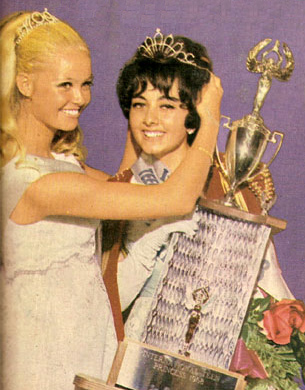 La cérémonie de Miss Monde 2007 s’est tenue hier soir, pour la quatrième fois consécutive, à Sanya sur l’île chinoise de Hainan. Organisée depuis 1951, la cérémonie a notamment distingué Aishwarya Rai, actrice de Bollywood mondialement connue et égérie de l’Oréal, et Rosanna Davison, fille du chanteur irlandais Chris de Burgh. Cette année le jury a couronné... la Chine, en la personne de Zhang Zilin. A 23 ans, mesurant 1, 82m (taille peu commune pour une chinoise !), cette secrétaire a vu ses rêves se réaliser. La gagnante de 2006, la Tchèque Tatiana Kucharova, lui a remis sa couronne, devant une audience d’environ 2 milliards de téléspectateurs. La première dauphine est Angolaise, et la seconde dauphine vient du Mexique.
Les 106 finalistes sont arrivées le mois dernier en Chine faire une tournée tout d’abord à Pékin, où elles ont visité la Grande Muraille, ont enregistré la chanson (sic) qui accompagnera le trajet de la flamme olympique, et ont aidé la Croix Rouge (qui après Adriana Karembeu, n’hésite apparemment plus à faire appel à des ambassadrices de choc) à récolter de l’argent pour construire des centres d’aide. Puis ces demoiselles sont allées sur l’île de Hainan, dans le sud de la Chine, et se sont livrées à diverses activités.
La finale de Miss Monde se flatte d’être l’évènement télévisé le plus regardé à travers le monde, dépassant les 2 milliards de téléspectateurs. Notons que la cérémonie, se tenant en Chine, bénéficie du coup de pouce apporté par l’audience chinoise, et son chiffre assez impressionnant. Est-ce aussi un pur hasard qu’à quelques mois des Jeux Olympiques de Pékin, ce soit une Chinoise qui soit élue Miss Monde ?
Inscription à :
Articles (Atom)